The Panamá Metro, also known as Metro de Panamá, is the rapid transit system serving Panama City, Panama. It was built to ease traffic congestion between the city and San Miguelito and to offer a practical alternative to road transport. The system works alongside the MiBus network and runs every day of the year. Line 1 opened on April 6, 2014, Line 2 followed in 2019, and the airport branch on Line 2 opened in 2023. San Miguelito is the key interchange station between the two lines, and the wider transport plan for the city also includes future monorail, tramway, trams, and aerial lift projects.
| Key | Information |
|---|---|
| System | Rapid transit system in Panama City, Panama |
| Lines in operation | 2 metro lines plus the El Ramal airport branch |
| Main interchange | San Miguelito |
| Line 1 opening | April 6, 2014 |
| Line 2 opening | 2019 |
| Airport branch opening | 2023 |
| Integration | Works with the MiBus public transport network |
| Long-term plan | Includes expansion with rapid transit, monorail, tram, and aerial lift lines |
Panamá Metro Map
Map of the Panama Metro with many stations.Click on the map to enlarge it or download the Panama Metro map in PDF format.
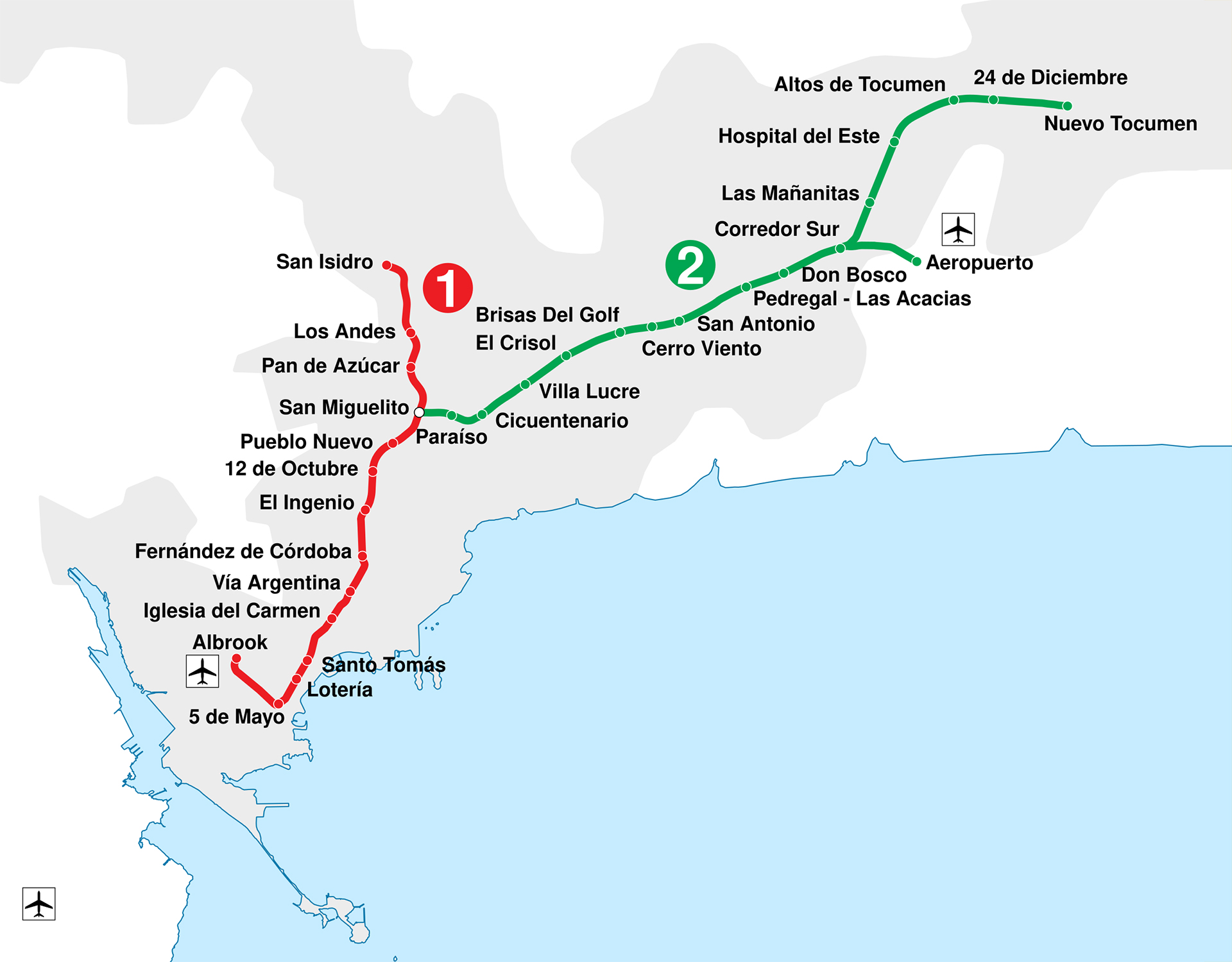
Lines and Stations
The Panamá Metro currently operates two lines across Panama City and nearby areas. It is a core part of city transport, helping reduce road traffic and giving residents and visitors another public transport option that runs daily.
Line 1
Line 1 opened on April 6, 2014 and follows a mostly north-south route. It is 18.1 kilometres (11.2 miles) long, has 15 stations, and includes elevated, underground, and at-grade sections. A full running time is about 25 minutes.
The route goes from Villa Zaita to Albrook, stopping at San Isidro, Los Andes, San Miguelito, and central Panama City before reaching Albrook. This station connects directly to the main bus terminal and Albrook Mall.
Line 2
Line 2 opened in 2019 and runs on an east-west alignment. The main line is about 20.4 kilometres (12.7 miles) long and has 18 stations, all elevated. Its route connects San Miguelito with Nuevo Tocumen and includes maintenance facilities at the eastern end.
San Miguelito is the interchange between Line 1 and Line 2. In March 2023, the El Ramal branch opened, linking Corredor Sur station to Tocumen International Airport.
Active stations
| Station | Details |
|---|---|
| Albrook | Line 1 station; western terminal with access to the main bus terminal and Albrook Mall. |
| 5 de Mayo | Line 1 station in central Panama City. |
| Lotería | Line 1 station. |
| Santo Tomás | Line 1 station. |
| Iglesia del Carmen | Line 1 station. |
| Vía Argentina | Line 1 station. |
| Fernández de Córdoba | Line 1 station. |
| El Ingenio | Line 1 station. |
| 12 de Octubre | Line 1 station. |
| Pueblo Nuevo | Line 1 station. |
| San Miguelito | Interchange station between Line 1 and Line 2. |
| Pan de Azúcar | Line 1 station. |
| Los Andes | Line 1 station. |
| San Isidro | Line 1 station. |
| Villa Zaita | Line 1 northern terminal. |
| Paraíso | Line 2 station. |
| Cincuentenario | Line 2 station. |
| Villa Lucre | Line 2 station. |
| El Crisol | Line 2 station. |
| Brisas del Golf | Line 2 station. |
| Cerro Viento | Line 2 station. |
| San Antonio | Line 2 station. |
| Pedregal | Line 2 station. |
| Don Bosco | Line 2 station. |
| Corredor Sur | Line 2 station with connection to the airport branch. |
| Las Mañanitas | Line 2 station. |
| Hospital del Este | Line 2 station. |
| Altos de Tocumen | Line 2 station. |
| 24 de Diciembre | Line 2 station. |
| Nuevo Tocumen | Line 2 eastern terminal. |
| ITSE | El Ramal airport branch station. |
| Aeropuerto | Airport station for Tocumen International Airport. |
The system is part of a broader master plan for transportation in Panama City. More extensions and stations are planned, but the stations list above covers the active stations in service now.
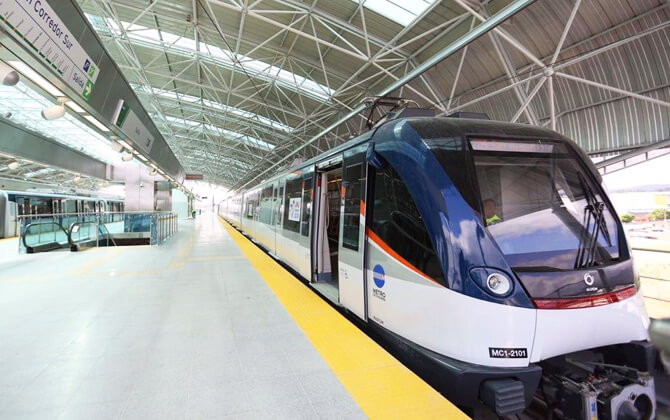
Panamá Metro Operating Hours
The Panamá Metro operating hours are the same all year, with daily service on weekdays, Saturdays, Sundays, and public holidays. If you are checking opening hours, opening times, or timings today, the regular timetable is simple and easy to follow.
| Service detail | Timings |
|---|---|
| Monday to Friday opening hours | 5:00 AM to 11:00 PM |
| Saturday operating hours | 5:00 AM to 10:00 PM |
| Sunday and public holiday working hours | 7:00 AM to 10:00 PM |
| Weekday service span | 18 hours |
| Saturday service span | 17 hours |
| Sunday and holiday service span | 15 hours |
On weekdays, the starting time is 5:00 AM and the closing time is 11:00 PM. On Saturdays, trains also start at 5:00 AM but close at 10:00 PM. On Sundays and public holidays, service starts later, at 7:00 AM, and ends at 10:00 PM.
The first and last train can vary slightly by station, so if you need an exact train schedule or route timetable for a specific trip, it is smart to check ahead. During weekday rush hours, trains can get busy. For sightseeing, off-peak hours or weekends are usually more comfortable.
Prices, tickets and discounts
The Panamá Metro uses a flat fare system. A single ticket price on Line 1 is B/.0.35 ($0.35), while Line 2 costs B/.0.50 ($0.50) per ride. If your trip includes a transfer between Line 1 and Line 2, the total fare is B/.0.85 ($0.85).
To travel, passengers need a rechargeable Metro Card, or Tarjeta Metro. The card costs B/.2.00 ($2.00), and the minimum top-up is B/.2.00 ($2.00). It can be bought and recharged at customer service centers in metro stations. The same card also works on Panama City buses, which makes public transport transfers easier.
Cash is not accepted on the system, so a card or another accepted payment method is essential before boarding. Some stations also accept contactless bank cards, though carrying a Metro Card is still the most practical option for many riders.
Discount fares are available for seniors, students, and passengers with disabilities. To get the reduced price, eligible users need to apply for a special discount card.
The metro also offers free Wi-Fi during the journey.
Airport Connection
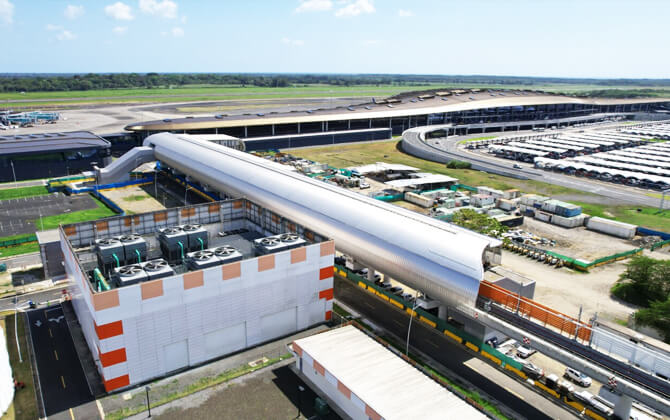
The airport connection on the Panamá Metro is one of the cheapest ways to reach the city by public transport. The main issue is not the route itself, but finding the station. It sits in the corridor between Terminal 1 and Terminal 2, and travelers often mention limited or missing signage inside the airport.
Expect a walk of about 5 to 10 minutes. That is roughly 0.4 to 0.8 kilometres (0.2 to 0.5 miles), depending on your starting point in the terminal area. If needed, ask for directions to the other terminal and the connecting corridor.
The fare is very low. If you travel from the airport to the city center and transfer between Line 2 and Line 1, the total cost is B/.0.85 ($0.85). If you use only Line 2, the price is B/.0.50 ($0.50). A trip on Line 1 alone costs B/.0.35 ($0.35).
Visitors do not always need a dedicated metro pass or card for this trip. The easiest option can be to tap a contactless credit or debit card at the gate, or use a mobile device with NFC such as Apple Pay or Google Pay. If that does not work for you, buy a Metro Card for B/.2.00 ($2.00) and load it at the station.
- Look for the corridor between Terminal 1 and Terminal 2.
- Do not rely completely on Google Maps, which may show the route incorrectly or suggest a longer bus journey.
- Follow the metro route plan and check the official Metro de Panamá app or website if needed.
- If you are heading downtown, expect to change trains at San Miguelito.
- On Sundays, service starts later, so early flights need extra planning.
Connections
The Panamá Metro is integrated with the city bus network, making it an important part of local transport in Panama City. Several stations have nearby bus stops, and San Miguelito is the main interchange where Line 1 and Line 2 meet.
| Station | Details |
|---|---|
| Albrook | Access to Albrook–Bahía H, Albrook–Bahía G, Albrook–Bahía B, Albrook–Bahía E, and the National Transport Terminal. |
| 5 de Mayo | Access to Marañón, Gimnasio Maranon, Piquera de Buses Balboa & Diablo, El Límite Calidonia, and M. Calidonia. |
| Iglesia del Carmen | Access to Iglesia del Carmen and Parada Sol de la India. |
| Vía Argentina | Access to Calle Ernestina Sucre Tapia and Galerías Obarrio. |
| Fernández de Córdoba | Access to Furniture City Vía España, Furniture City-R, Carrasquilla-I, and Vía Fernández de Córdoba/Calle 64 Oeste. |
| El Ingenio | Access to Escuela Manuel E. Amador, Parada a Pueblo Nuevo, and El Ingenio. |
| 12 de Octubre | Access to Transístmica and Castilla de Oro. |
| Pueblo Nuevo | Access to Calle 81 Oeste-I, Calle 81 Oeste-R, Parada del Cementerio, and Parada de Bandag. |
| San Miguelito | Access to Machetazo San Miguelito and interchange between the two metro lines. |
| Pan de Azúcar | Access to Moya, Rodapán, and Pan de Azúcar. |
| Los Andes | Access to Centro Comercial Los Andes, Piquera de Rutas Interna de Veranillo, and Industrias de Buena Voluntad-I. |
| San Isidro | Access to Entrada Tinajitas, Cruce San Isidro, Parada de la entrada de San Isidro (poly clinic), Estación San Isidro R, and Parada de Campo Verde (Pozuelo). |
Albrook is especially important because it connects the metro with the main bus terminal, a major hub for transportation in and beyond Panama City. Line 2 also includes the airport branch to Aeropuerto, while the main route continues from San Miguelito to Nuevo Tocumen.
Regulations
The Government has declared the Panamá Metro cable car project to be of public utility to improve urban mobility and quality of life in the districts of Panama and San Miguelito.
According to Executive Decree No. 13 of November 26, 2025, issued by the Ministry of Housing and Territorial Planning and published in Official Gazette No. 30413-C, the Cable Car Influence Polygon of the Panamá Metro system is established and delimited.
This regulation covers an area of 6.7 kilometres (4.2 miles) and includes six stations: Balboa, Cincuentenario, Samaria, Mano de Piedra, Valle de Urracá, and Torrijos Carter.
All work, procedures, and related actions will be coordinated by Metro de Panamá, S.A. together with the relevant public entities.
Any act involving the use, enjoyment, rights, encumbrances, transfer, construction, or modification of real estate within the zone requires the express non-objection of Metro de Panamá, S.A. before approval. The same rule applies to property recognition, land-use changes, and modifications to economic activities within the area.
The decree also states that any land acquisition or occupation needed for the transport system will be carried out based on the value in effect on the date the regulation enters into force.
Once the final alignment and profile are defined, the servitude area for the cabins will be established through the corresponding procedures. The regulation also sets the gauge that must remain free of obstacles in both vertical and horizontal planes to ensure the system stays safe.
Interesting Facts
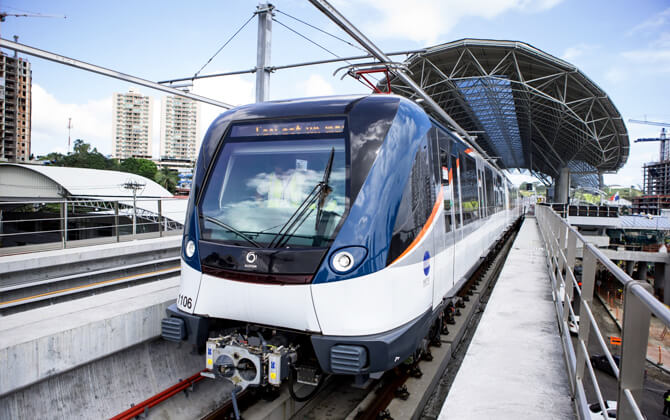
- The Panamá Metro is the first metro system in Central America.
- Line 1 opened on April 6, 2014, and Line 2 entered regular service on April 25, 2019.
- Line 1 runs 18.1 kilometres (11.2 miles) with 15 stations, while Line 2 spans 24 kilometres (14.9 miles) with 19 stations.
- San Miguelito is the interchange station between Line 1 and Line 2.
- Line 2 includes a branch to Tocumen International Airport, opened in 2023.
- The metro was developed to reduce traffic congestion and provide an alternative to road transport.
- In its first year, the system carried an average of 200,000 passengers per day, about 25% more than expected.
- Alstom delivered 19 three-car Metropolis trainsets, and all stations were designed to handle five-car formations.
The system is also part of a wider master plan for city transport, with future expansion that includes rapid transit, monorail, tramway, trams, and aerial lift projects.
Future Expansions
The Panamá Metro has a long-term expansion plan for a much larger network by 2035 to 2040. The current roadmap includes extensions to existing lines, construction of Line 3, and studies for more rapid transit, tram, monorail, and aerial lift projects.
Line 1 is considered nearly complete in its present form. An infill station at Curundú was part of the original plan but had not been built as of March 2025. A further extension to La Cabima was studied and later ruled out by metro officials in 2025.
Line 2 is planned to grow in both directions. The main western extension, known as Line 2A, would run from San Miguelito toward Paitilla and add 9.2 kilometres (5.7 miles) and 11 stations, with a second interchange with Line 1 at Iglesia del Carmen. A one-station eastern extension from Nuevo Tocumen to Felipillo is also planned, and a branch from Condado del Rey to MERCA Panamá has been proposed.
Line 3 is the most advanced project. It is under construction as a 24.5-kilometre (15.2-mile) monorail linking Ciudad del Futuro with Albrook station. The route includes a tunnel beneath the Panama Canal and is expected to open after the underground section is completed. An extension toward La Chorrera is also being studied in two stages, first to Costa Verde and then to Parque Libertador.
Lines 4 and 5 are planned rapid transit lines scheduled to open by 2040. Line 4 would begin at Curundú, run through central and southern Panama City, and end at Don Bosco Tocumen. Line 5 is planned as an underground route from Santo Tomás to El Crisol on Line 2, serving the financial district and other major commercial areas.
Lines 6, 7, and 8 are planned tram services for medium-demand corridors. Line 6 would connect Merca Panamá and Curundú, Line 7 would serve Casco Antiguo, and Line 8 would link eastern Panama City with transfers to Lines 1, 2, 4, and the future Metrocable.
Line 9 is proposed as a monorail between Ciudad del Futuro and the Centennial Bridge, serving Vacamonte, Veracruz, and Panamá Pacífico International Airport.
The Metrocable, also called the San Miguelito Cable Car, is planned as an aerial lift through San Miguelito District from Torrijos Carter to El Balboa. It will connect with Line 2 at Cincuentenario station, and the master plan also includes possible future links to Villa María, San Isidro, and Los Andes.
Tourist Sites
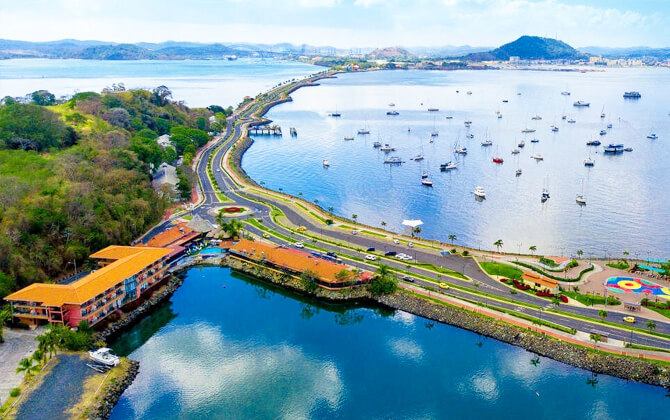
The Panamá Metro is a practical way to reach several of Panama City’s best-known attractions. One of the most useful stations for visitors is 5 de Mayo, which is close to Casco Viejo, the Old Town. This UNESCO World Heritage Site is known for colonial architecture, narrow streets, restaurants, squares, monuments, hotels, and a lively evening atmosphere.
From Albrook, travelers can continue by bus to the Amador Causeway and visit the Biomuseo. The museum has permanent and temporary exhibitions focused on ecology and environmental awareness. The same route also helps visitors reach other popular parts of the city.
Other stations are handy for sightseeing too:
- Vía Argentina for restaurants, hotels, bars, and nearby neighborhoods.
- Iglesia del Carmen for the church of the same name and the banking district.
- 5 de Mayo for Casco Viejo and nearby waterfront areas.
- Albrook for the national transport terminal and bus connections toward the Causeway.
Popular destinations reached by metro or by metro-and-bus connections include:
- Casco Viejo
- Biomuseo
- Cinta Costera
- Fish Market
- Amador Causeway
For visitors trying to keep travel costs down, the metro is a simple and efficient transport option. With short travel times and good bus links, it makes moving around Panama City much easier.